Multichannel marketing and automation: Engage customers across channels efficiently
Published on May 26, 2026/Last edited on May 27, 2026/10 min read
Team Braze
Braze"Multichannel marketing" is one of those terms everyone uses but not everyone defines the same way. Technically, it means using more than one channel to reach customers. Most marketers use it to mean something more intentional, with at least some coordination across those channels. According to the 2026 Global Customer Engagement Review, 48% say they lack the tools to orchestrate that coordination.
Automation is what starts to bring it all together, connecting channels to real-time customer data so messages respond to what customers actually do. For example, a customer sees an ad for running shoes. Their phone buzzes with a limited-time discount. Then an email lands reminding them the offer ends tonight. AI-driven targeting, customer segmentation, and campaign orchestration sit behind each of those touchpoints across email, SMS, push notifications, MMS, and WhatsApp, reducing friction, increasing engagement, and improving ROI.
This guide covers how it works, what the strongest programs have in common, and what real results look like.
TL;DR
- Multichannel marketing automation connects real-time customer data to messaging across email, SMS, push notifications, MMS, and WhatsApp, replacing manual campaign management with behavior-driven workflows
- AI-driven targeting, customer segmentation, and campaign orchestration let brands deliver personalized messages at the right moment, on the right channel, at scale
- Coordinating in-product and out-of-product channels significantly outperforms single-channel approaches on retention, engagement, and ROI
- Best practices include centralizing customer data, building behavioral trigger sequences, running lifecycle automation, and testing performance continuously
- GOGOX, Floward, and Peacock each saw measurable gains in retention, acquisition costs, and churn reduction through coordinated, automated multichannel campaigns
Key takeaways
- Customer segmentation works best when built around behavioral triggers and lifecycle stage, not demographics alone
- Real-time personalization depends on a unified customer profile that updates continuously as behavior changes
- Channel optimization means directing messages to where each individual customer actually engages, not running every channel at full volume
- Lifecycle automation brings consistency to the customer experience at every stage, from onboarding through re-engagement
- Campaign KPIs should be defined before launch and tracked at both channel level and program level to identify what to improve
- A/B testing one variable at a time across subject lines, timing, channel sequencing, and CTAs generates the reliable data needed for systematic improvement
What is multichannel marketing automation?
Multichannel marketing automation is the use of automated workflows to reach and engage customers across multiple channels, with each message driven by real-time customer data. Multichannel marketing automation matters for marketers because reaching customers on the channels they actually use, with messages timed to their behavior, consistently improves engagement, retention, and ROI.
Brands use multichannel marketing automation to deliver personalized, timely messages by connecting customer data to those automated workflows. When a customer takes a specific action, a message tailored to that moment goes out on their preferred channel automatically, whether that's email, SMS, push notifications, MMS, or WhatsApp.
Multichannel vs. omnichannel vs. cross-channel marketing
Multichannel, omnichannel and cross-channel are three terms that get used interchangeably, but they describe different things. Knowing the distinction helps when deciding how to build and evolve a marketing strategy.
Key benefits of multichannel automation
Customers notice when the messaging feels coordinated, even if they couldn't name why. The experience feels more relevant, less repetitive, and easier to act on.
- Increased reach across customer-preferred channels. Different customers engage on different channels. Multichannel marketing automation tracks where each customer is most likely to respond and directs messages accordingly, expanding reach without guesswork.
- Consistent, personalized messaging. Automation makes personalization at scale practical. Campaigns can be personalized across purchase history, behavioral triggers, lifecycle stage, and real-time events, without rebuilding them manually for each segment.
- Streamlined operations and reduced manual effort. Once journeys are built and tested, they run without constant intervention. Teams focus on strategy, creative, and optimization rather than execution.
- Improved engagement, retention, and ROI. Automated suppression, frequency capping, and channel-level optimization direct messages toward people likely to act on them, reducing wasted spend and improving returns across the full channel mix.
Best practices for multichannel campaign orchestration
These five practices apply across team sizes, industries, and channel mixes. They're what strong multichannel automation programs consistently have in common.
1. Collect and centralize customer preferences
Collect customer data into one profile that updates in real time. Fragmented data leads to fragmented messaging.
2. Segment audiences for targeted messaging
Behavioral segmentation groups customers by what they actually do. It gives campaigns a more accurate signal of intent than age, location, or other demographic filters alone.
3. Use AI to optimize timing and real-time personalization
Multichannel optimization means letting AI handle decisions that are difficult to scale manually, like when to reach each customer and which channel to use. Behavioral triggers and real-time personalization take this further, automatically sending messages in response to what customers do.
4. Lifecycle automation and re-engagement campaigns
Different stages of the customer relationship need different messages. Lifecycle automation handles the sequencing automatically, from onboarding new customers to re-engaging lapsed ones.
5. Track performance using clear KPIs and attribution models
Track at both channel and program level. Channel metrics like open rates show whether individual messages are landing, while program metrics like retention rates show whether the strategy is working. A/B testing and attribution models then show you what to change.
Channel optimization: deliverability, conversions, and costs
Channel optimization covers the decisions that determine whether campaigns reach the right people efficiently and what they cost to get there.
- Send through preferred channels to maximize engagement. A customer who opens every push notification but rarely reads email has a clear channel preference. Directing messages to the channels where each customer actually engages improves open rates and reduces wasted sends.
- Validate subscriber lists to avoid bounces and errors. Sending to lapsed or invalid contacts wastes budget and gradually damages deliverability metrics. For example, a high bounce rate from invalid email addresses can affect inbox placement across an entire list. Regular list validation and automated suppression of non-engaging contacts keeps things clean.
- Monitor costs and ROI per channel. Different channels carry very different cost structures. SMS campaigns and WhatsApp messaging typically carry a per-message cost that email and push notifications don't. Tracking ROI by channel lets teams allocate budget toward what performs.
- A/B test content and CTAs for continuous improvement. A/B testing generates data instead of relying on assumptions. Testing one element at a time, such as CTA wording or subject line, produces clear signals about which variables drive performance and which don't.
Real-world examples of multichannel marketing and automation
A logistics app, a gifting brand, and a streaming service. Here's what each achieved with automated multichannel campaigns.
1. GOGOX goes the extra mile, doubling retention with an automated cross-channel referral program
GOGOX (formerly GOGOVAN) is an APAC-based last-mile delivery app that reduced van-booking times from up to 30 minutes to 10 to 15 seconds. Since launching in 2013, it has expanded from Hong Kong across China, India, Singapore, South Korea, Taiwan, and Vietnam.
The challenge
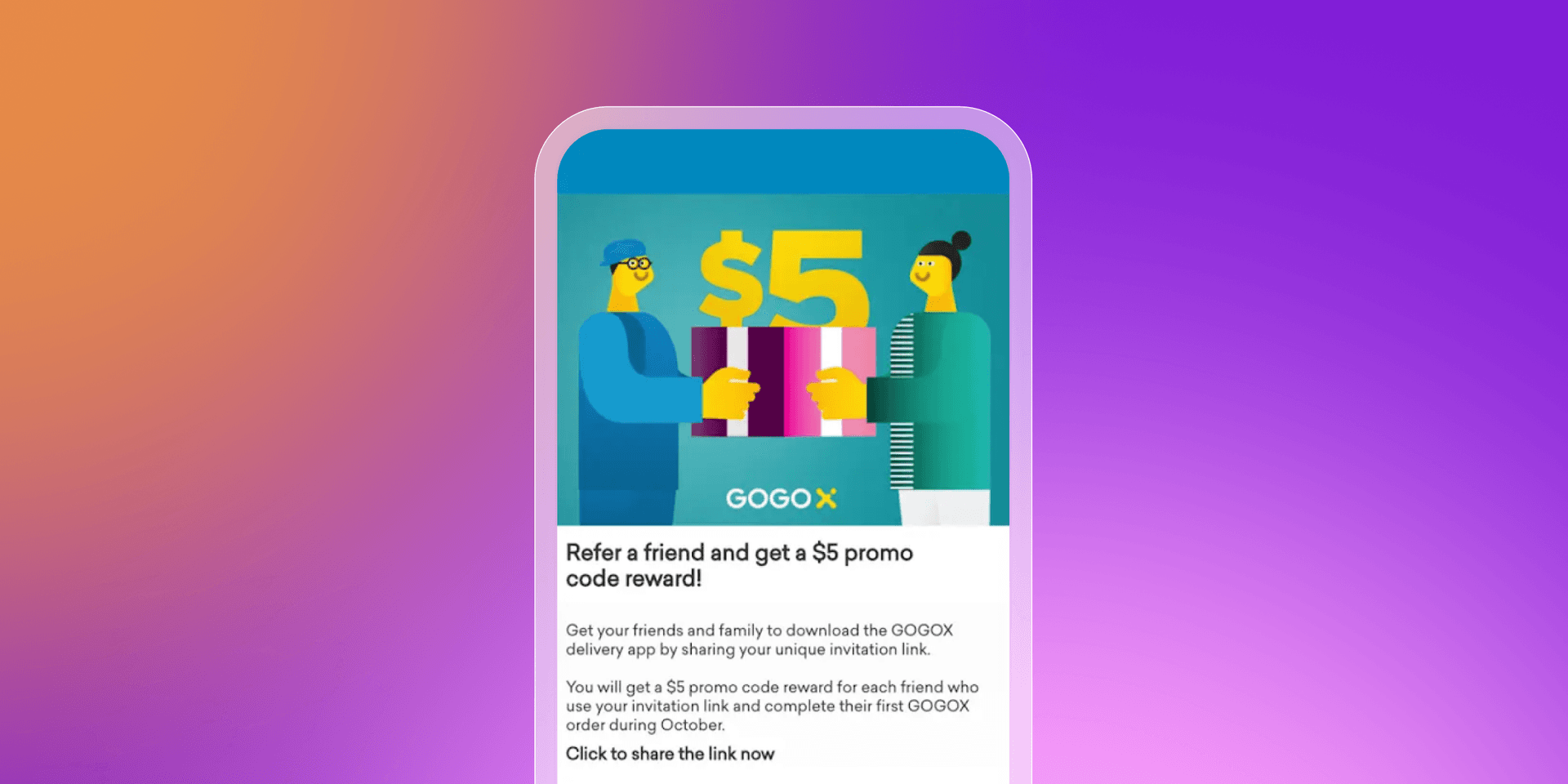
GOGOX needed to grow its customer base without losing the customers it already had. Internal surveys showed nearly half of new users had found the app through word of mouth. The opportunity was to turn that into a structured, automated referral program.
The strategy
GOGOX used Braze to build unified customer profiles, then ran a coordinated multichannel referral campaign across email, push notifications, in-app messaging, and Braze News Feed. Calls to action created personalized WhatsApp messages with unique referral codes for each user to share with their contacts. AppsFlyer tracked which referrals converted to installs, giving the team data to optimize the campaign as it ran.
The wins
- Referrals doubled the average retention rate compared to non-referral acquisitions
- Cost per install reduced by 63% in Vietnam and 21% in Singapore
- Each referrer in Hong Kong successfully recommended an average of three new users
- Overall cost of acquisition fell by between 20% and 60% across Hong Kong, Singapore, and Vietnam
- Acquisition fell by between 20% and 60% across Hong Kong, Singapore, and Vietnam
2. Floward's Valentine's Day campaign blooms into 99.1% share of voice
Floward is the leading online destination for flower and gift delivery across MENA and the UK.
The challenge
Valentine's Day was high stakes. Floward needed to convert new users, re-engage lapsed customers, and hold share of voice in a competitive, time-pressured market, all within a five-week build.
The strategy
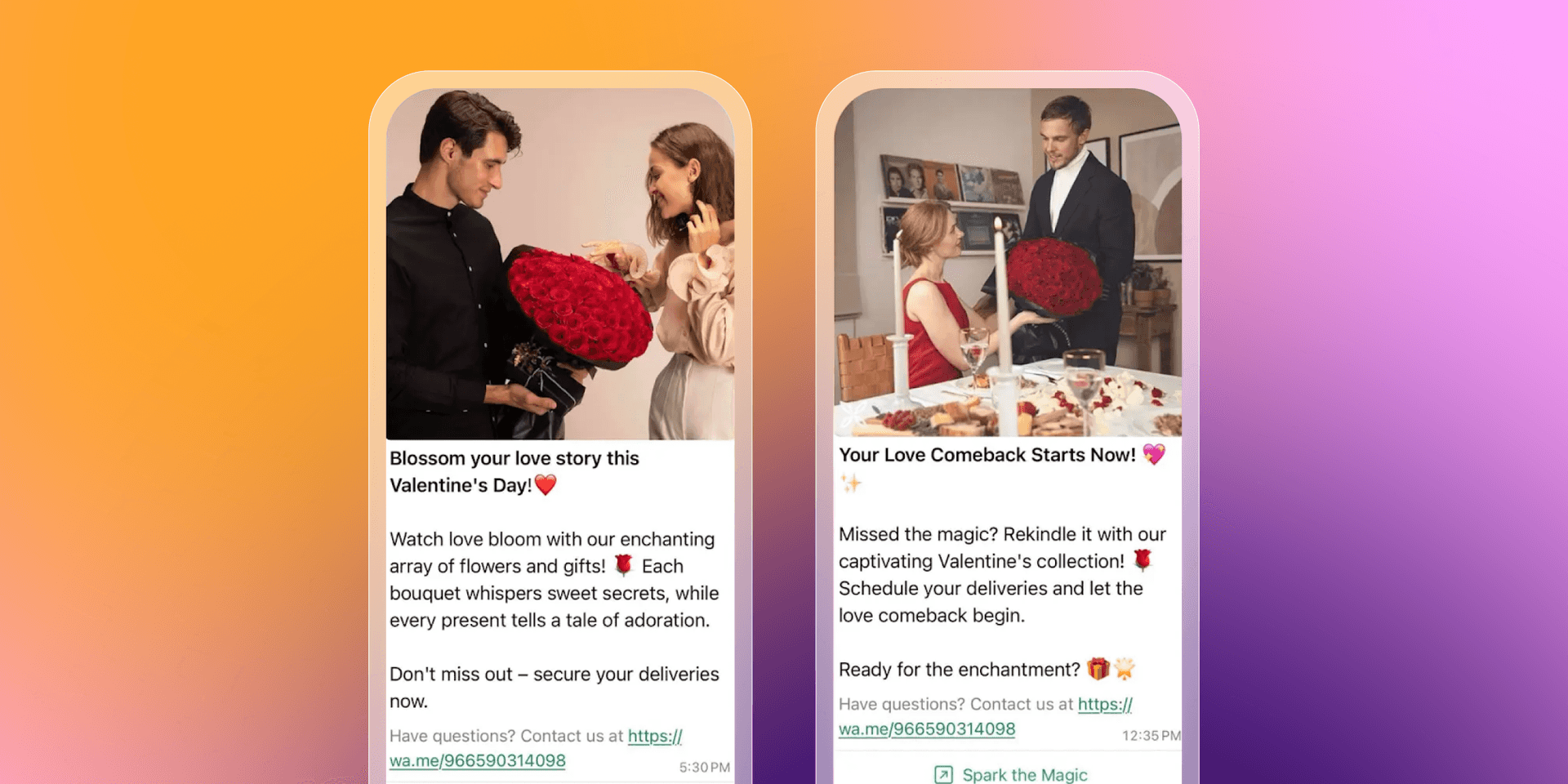
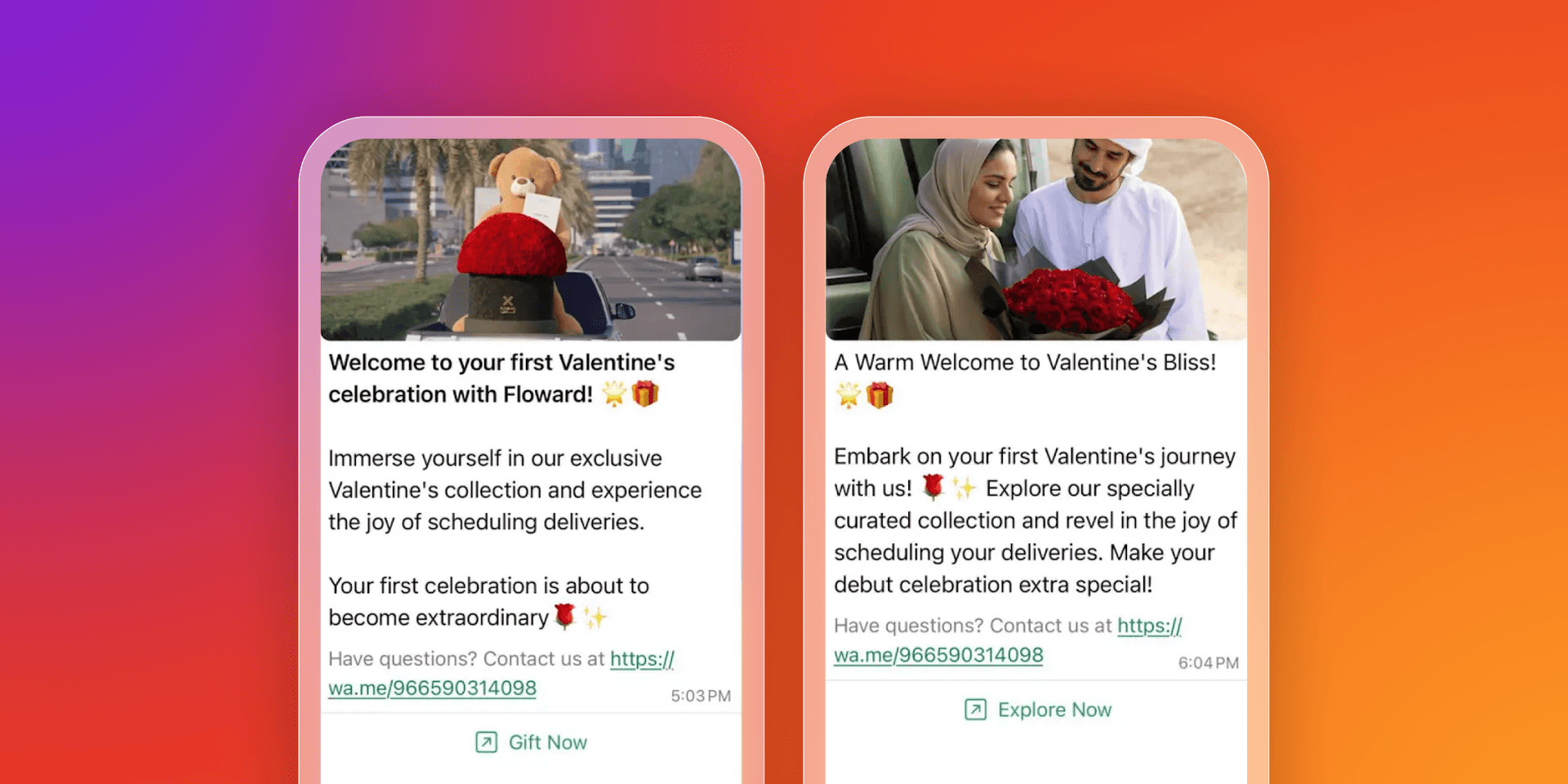
Floward used Braze Canvas to run personalized sequences across push notifications, email, in-app messages, and WhatsApp. An RFM analysis segmented the user base so each cohort received tailored content. Braze Intelligent Timing delivered messages when each user was most likely to engage, and Canvas Analytics tracked performance in real time so the team could adjust as the campaign ran.
The wins
- 55% WhatsApp read rate, the highest of any channel in the campaign
- 21% increase in positive reviews
- 99.1% share of voice compared to direct competitors over the Valentine's Day period
- WhatsApp generated the highest revenue and conversion rates of all channels used
3. Peacock binge-watches its way to a 20% drop in churn
Peacock is NBCUniversal's premium streaming service, offering exclusive originals, live sports, and next-day access to NBC and Bravo programming.
The challenge
Peacock needed to keep subscribers engaged, convert free users to paid, and reduce churn, all without revealing specific titles viewers had watched, a requirement under the US Video Privacy Protection Act.
The strategy
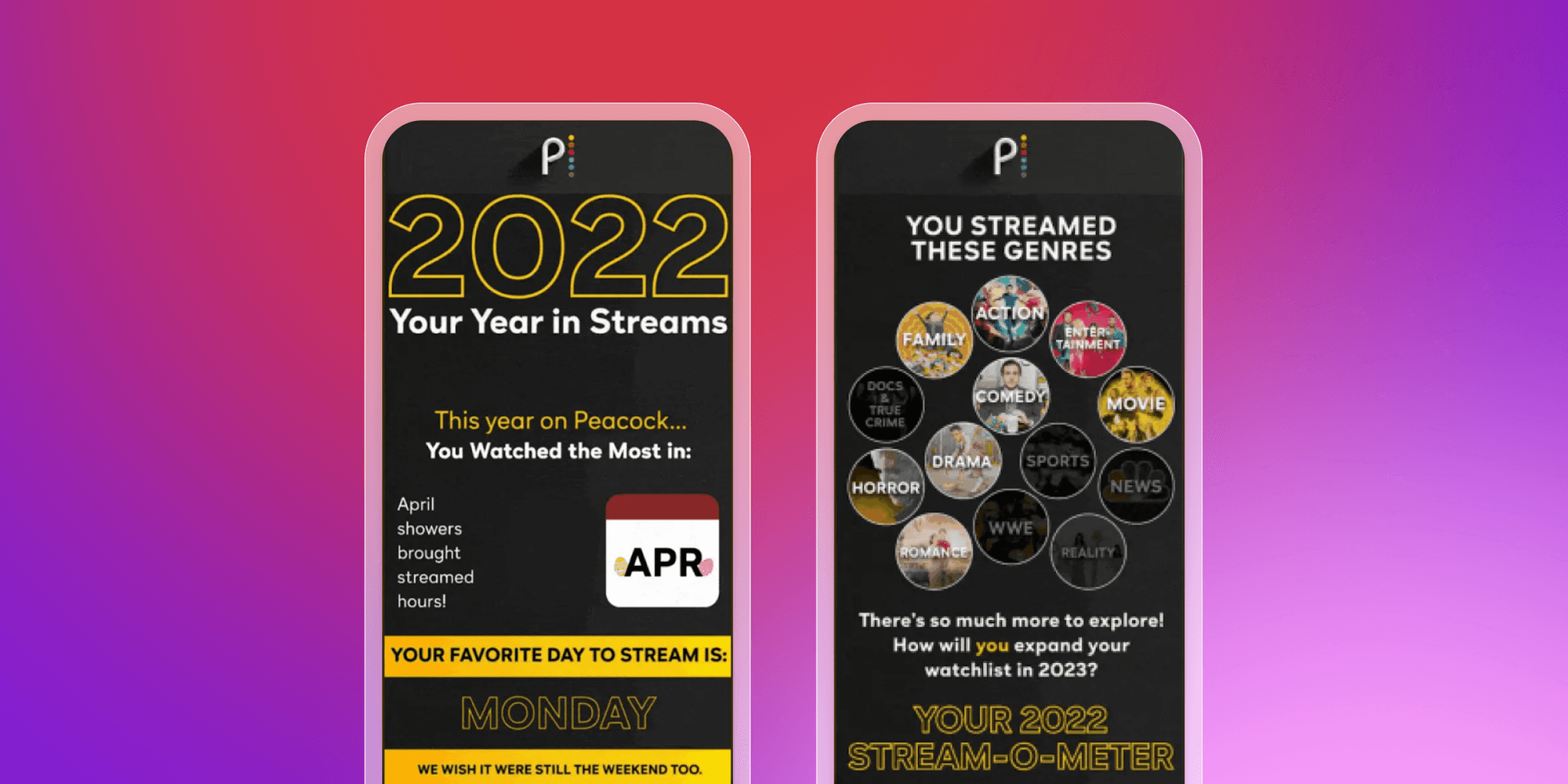
Peacock coordinated messaging across email, in-app messages, and push notifications through Braze, running automated triggered journeys alongside manual campaigns. For their year-in-review campaign, they worked with mParticle and Movable Ink to build a personalized email reflecting each subscriber's viewing habits. Audiences were split into four groups based on subscription tier and recent activity, with Liquid personalization generating a unique experience for each recipient.
The wins
- 20% decrease in churn rate over 30 days compared to the control group
- 6% higher upgrade rate from free to paid subscriptions compared to the control group
- 2-point lift in return rate to view content compared to the control group
- Peacock now automates over 70 triggers per day across the full customer lifecycle
Measuring success and key metrics
Most multichannel programs generate a lot of data. The question is which numbers actually tell you something useful.
- Engagement rates. Opens, clicks, and interactions show whether individual messages are resonating. They're useful early indicators, but they work best alongside downstream metrics.
- Conversion rates and ROI. Engagement matters when it leads somewhere. Conversion rates track whether customers take the actions that matter, such as a purchase or an upgrade. ROI connects those actions back to the cost of running the campaign.
- Customer retention and lifetime value. These are the longer-term indicators of whether a multichannel program is building real relationships. A customer who comes back repeatedly and spends more over time is a stronger signal than any single campaign metric.
- Channel-specific performance and blended metrics. Channel-level data shows where individual messages are landing. Blended metrics show how the program performs as a whole. Relying on one without the other makes it hard to know what's actually driving results.
Final thoughts and takeaways
Good multichannel programs don't necessarily run on the most channels or the most sophisticated setup. They run on accurate data, well-defined segments, and a habit of testing and adjusting. That's what the practices in this guide are for.
The platform teams use to run these programs matters as much as the strategy behind them. Fragmented tools mean fragmented execution.
Braze is designed to be intuitive, with a user interface to help you achieve complex tasks with ease. For example, our analytics suite is integrated into our journey builder, Canvas, so you can personalize journeys based on likely performance with just a few clicks.
Related Tags
Be Absolutely Engaging.™
Sign up for regular updates from Braze.